
Diagnostic assessment
Start With The Fault Not The Capacity
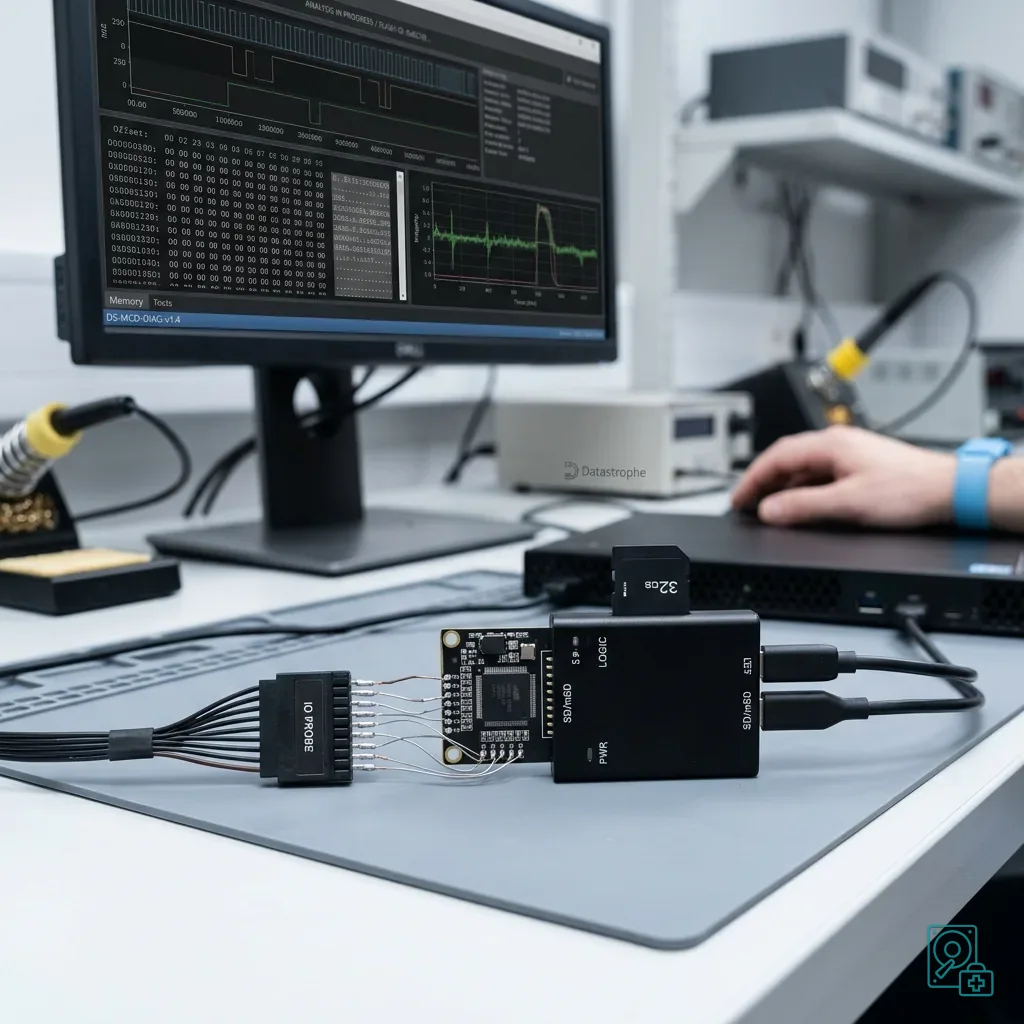
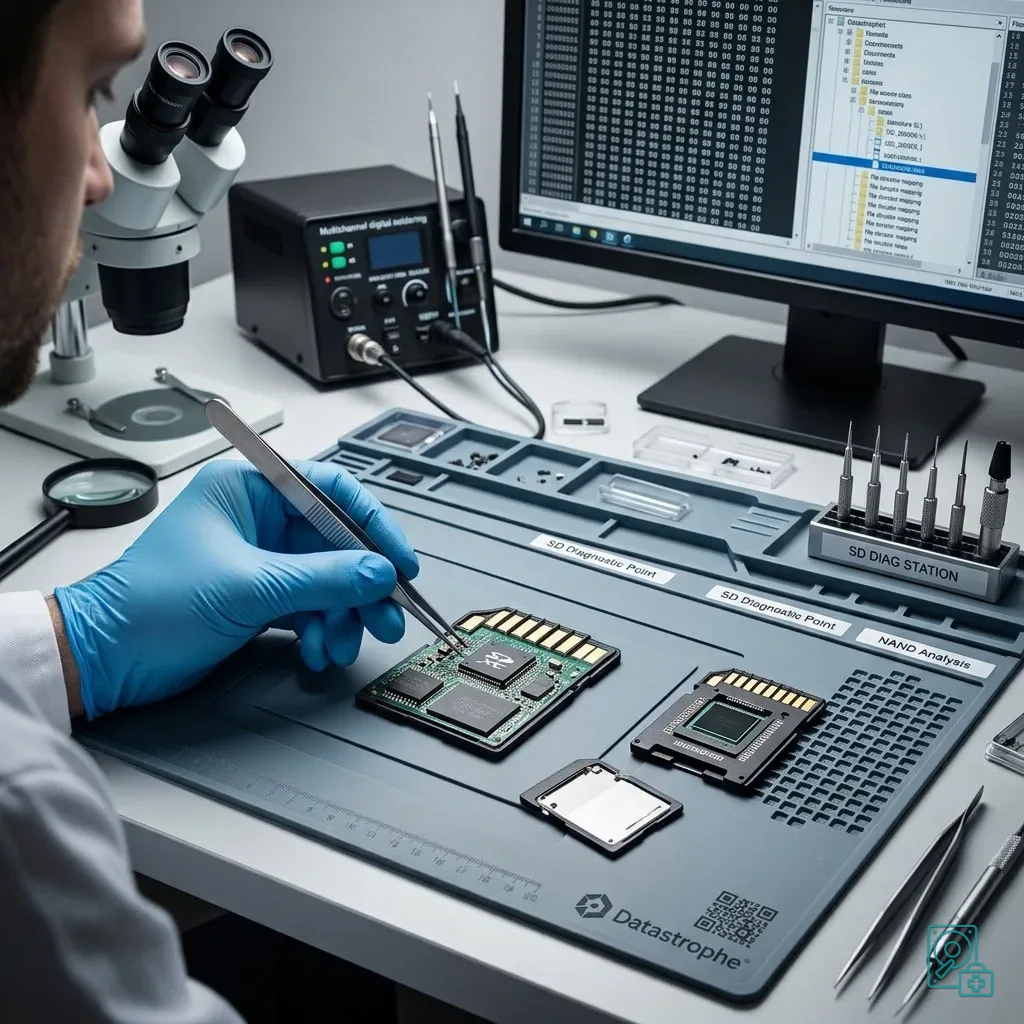
Memory card recovery cannot be priced from capacity alone. A small microSD can require more work than a larger SD card when it is cracked, corroded, electrically unstable or dependent on difficult controller and NAND access.
Deletion, formatting and file-system corruption call for different methods from physical breakage, water exposure, controller failure or intermittent recognition. A diagnostic assessment establishes which level of work is relevant.
A card visible in a camera or computer is not necessarily straightforward. Format prompts, wrong capacity, empty files and disconnection during copying all change the caution and acquisition time required.
Memory card data recovery describes the service itself. A fixed price before the fault and required data are known would conceal the factors that actually shape the case.
The source device matters as well. Still cameras, drones, action cameras, audio recorders and industrial equipment create different folder structures, formats and write patterns.
Two cards with equal capacity can therefore need entirely different work. An untouched readable card is usually easier to scope than one bent, wet, reused or scanned repeatedly after failure.
Diagnostic assessment
Data Value And Card Size Are Different
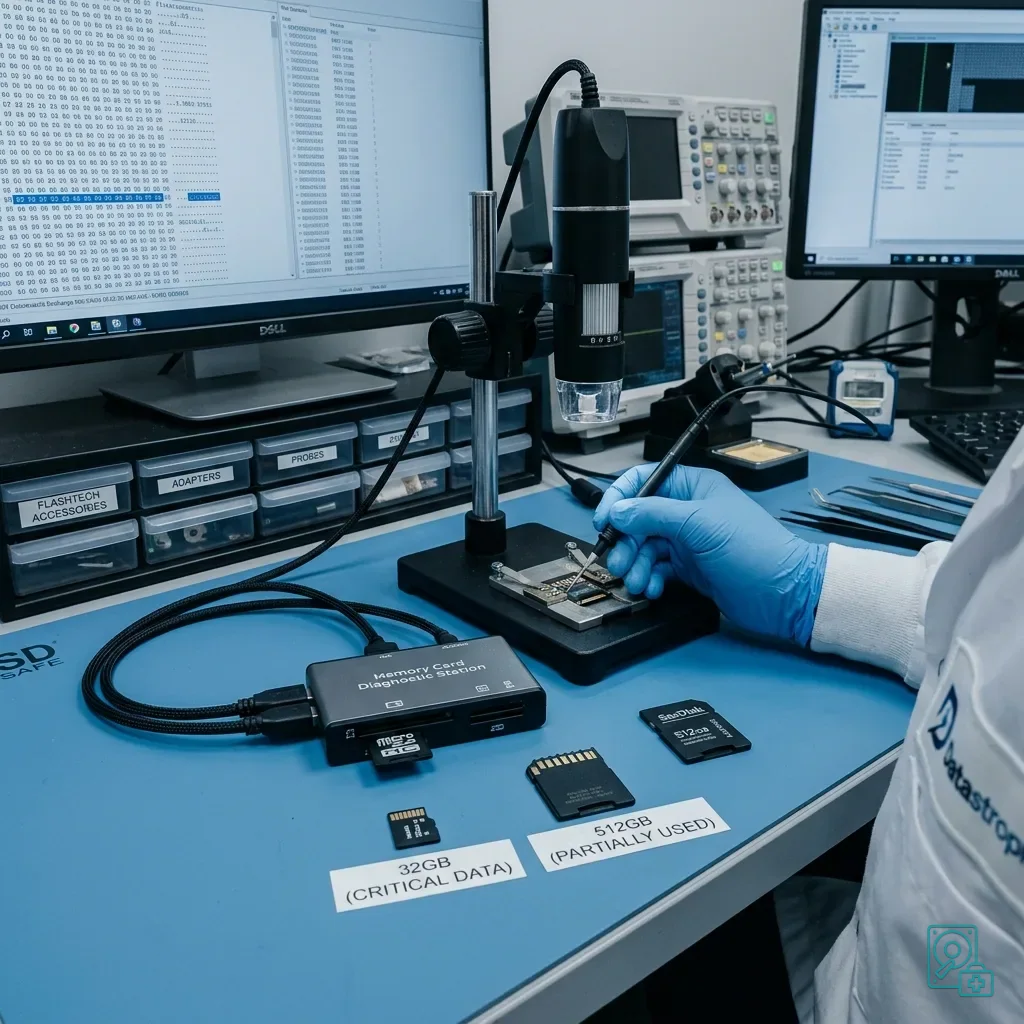
A 32 GB card may contain an irreplaceable event or essential production footage, while a 512 GB card may be almost empty. Useful value does not increase mechanically with storage size.
Capacity mainly affects reading, imaging and checking time. Unstable NAND, corrupted translation tables, proprietary formats and severe fragmentation can dominate the technical effort instead.
Concrete priorities make the assessment useful. A requested photo session, flight, video interval, audio folder or evidentiary file can be targeted and validated before secondary material.
Recovering data from a damaged memory card outlines common faults. Cost depends on how those faults obstruct access to the nominated files.
Handover work also varies. Thousands of fragments, partial versions and duplicates need more organisation and checking than one coherent directory with known dates.
That organisation is part of usability. A large output with unreliable dates, missing names and repeated fragments may require further sorting before the owner can identify a sound result.
Diagnostic assessment
Previous Actions Can Increase The Work
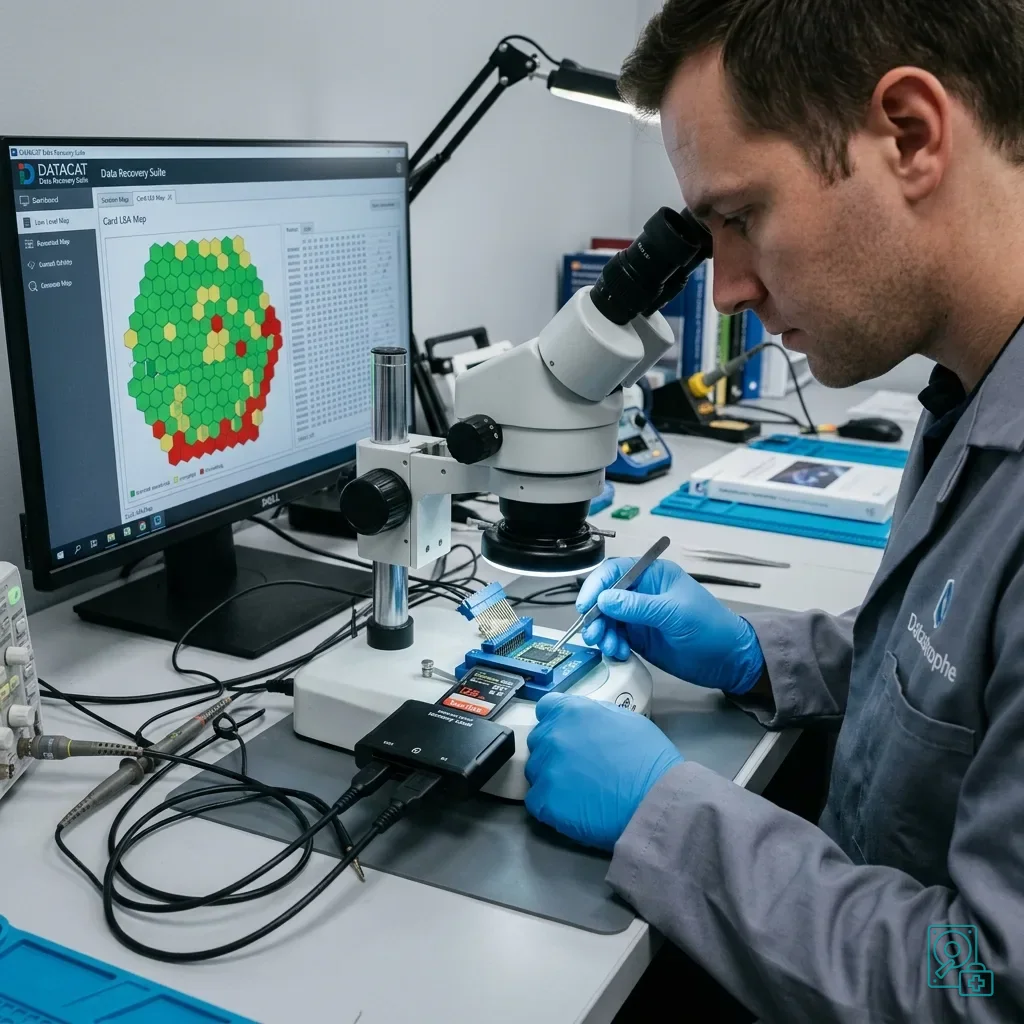
What happened after the incident can change both outcome and scope. Long scans, file-system repair, formatting, reuse and interrupted copies may modify metadata or overwrite content.
Writes are especially important on flash media. One new recording, photograph or device initialisation can occupy blocks that previously held required files even if the card still appears functional.
Poor readers and adaptors may introduce their own errors. If the card disconnects, heats or changes capacity during a scan, stop instead of stressing it without obtaining a controlled image.
Mistakes to avoid after data loss explains the wider risks. For memory cards, stop recording and avoid repeated utilities as soon as the files have value.
Report every attempted action during assessment without trying to tidy the history. It identifies likely changed areas and helps choose a safer acquisition strategy.
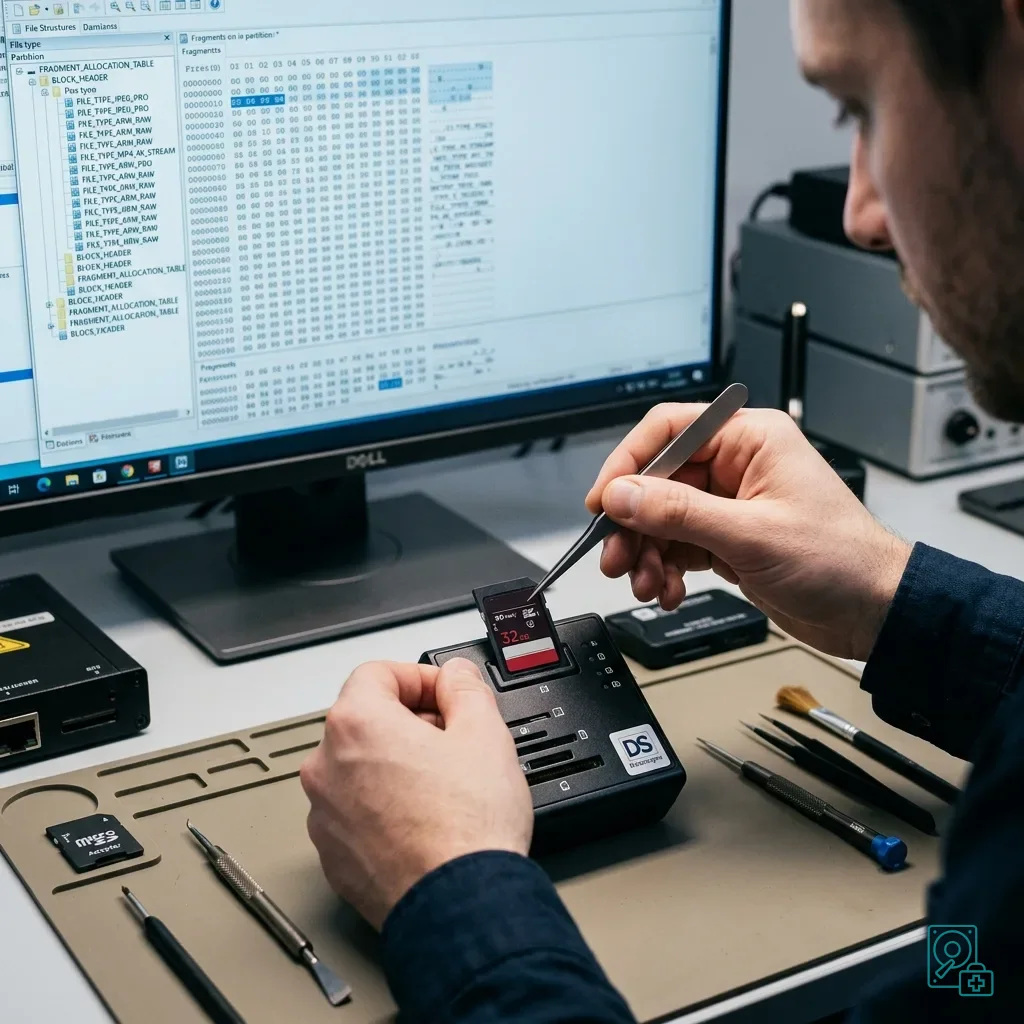
Diagnostic assessment
File Formats Determine Validation Effort
JPEG, RAW, long-form video, drone footage, 4K rushes, audio and specialist equipment files need different checks. Some formats tolerate missing fragments poorly and rely on indexes or companion metadata.
Video can require more than file extraction. A large recovered clip may lack its index, final segment or metadata and need reconstruction followed by playback in suitable software.
RAW photographs are also structurally specific. A visible embedded thumbnail does not prove that the full-resolution image data can be opened and processed.
Memory cards used in 4K cameras examines demanding video cases. Specialised formats increase the need for representative, application-aware validation.
Loop-recording devices add overwrite risk because newer files replace older recording regions. The practical scope depends on which date range still remains in memory.
Diagnostic assessment
Prepare A Quote That Can Be Assessed
Provide the card type and capacity, source device, exact symptom, incident date, required files and all actions already attempted. Include whether another reader or device behaved differently.
Keep the card in its current condition. Do not format, record, repair, glue or force damaged media, and protect cracked or wet cards without aggressive improvised cleaning.
State priorities precisely: photographs from an event, video from a time window, a project folder, audio recording or camera sequence. This lets the result be judged by usefulness rather than volume.
A credible assessment explains possible limits. Overwritten data may no longer exist, unstable NAND can prevent full imaging and some fragmented files may remain incomplete.
Datastrophe evaluates the card's condition, symptoms and expected files. The quote follows that technical scope rather than a simplistic capacity table or promised success rate.
A clear request supports a clear quote: identify the media, original device, required content and genuine urgency so the proposed work and dependencies can be stated plainly.
Diagnostic assessment
Primary Technical References And Limits
Reference scope — card data recovery cost: For memory card data recovery cost, the primary references used are www.sdcard.org. Physical evidence — card data recovery cost: They define the relevant preservation, storage or validation concepts, but they cannot establish the exact physical condition, controller state, key availability or business consistency of the device received. Controller evidence — card data recovery cost: Those points require measurements on the original set and verification on copies.
Diagnostic assessment
Arrange A Controlled Assessment
Complete set — card data recovery cost: For a technical assessment of memory card data recovery cost, provide the complete device or storage set, its associated power and interface parts, the symptom timeline and the priority records. Incident history — card data recovery cost: Keep member order, labels and authorised credentials separate from the parcel paperwork; do not restart the source merely to obtain a new screenshot.
Laboratory responsibility — card data recovery cost: Datastrophe performs the diagnosis, integrity checks and recovery directly in its own laboratory with its own team. Free assessment — card data recovery cost: Diagnosis and the quote are free. Transport boundary — card data recovery cost: Return courier transport is included; the carrier moves only the sealed parcel and neither accesses nor processes its data.
Controlled list — card data recovery cost: Before any payment, the client receives the proposed price and a checked list. Verification classes — card data recovery cost: Each item is classified, in order, as recoverable_verified, partial, detected_unverified or unrecoverable. Payment trigger — card data recovery cost: Only recoverable_verified items whose contents were checked and found usable are presented as recoverable. No-result rule — card data recovery cost: Payment is due only after the client accepts both the list and the price.
No-result rule — card data recovery cost: If no usable data is verified, recovery fails, or the client declines the list or price, no standard fee is payable. Rare-part exception — card data recovery cost: The only exception is a rare, costly and non-refundable part, which may be ordered only after a separate, explicit and priced proposal has been accepted.