
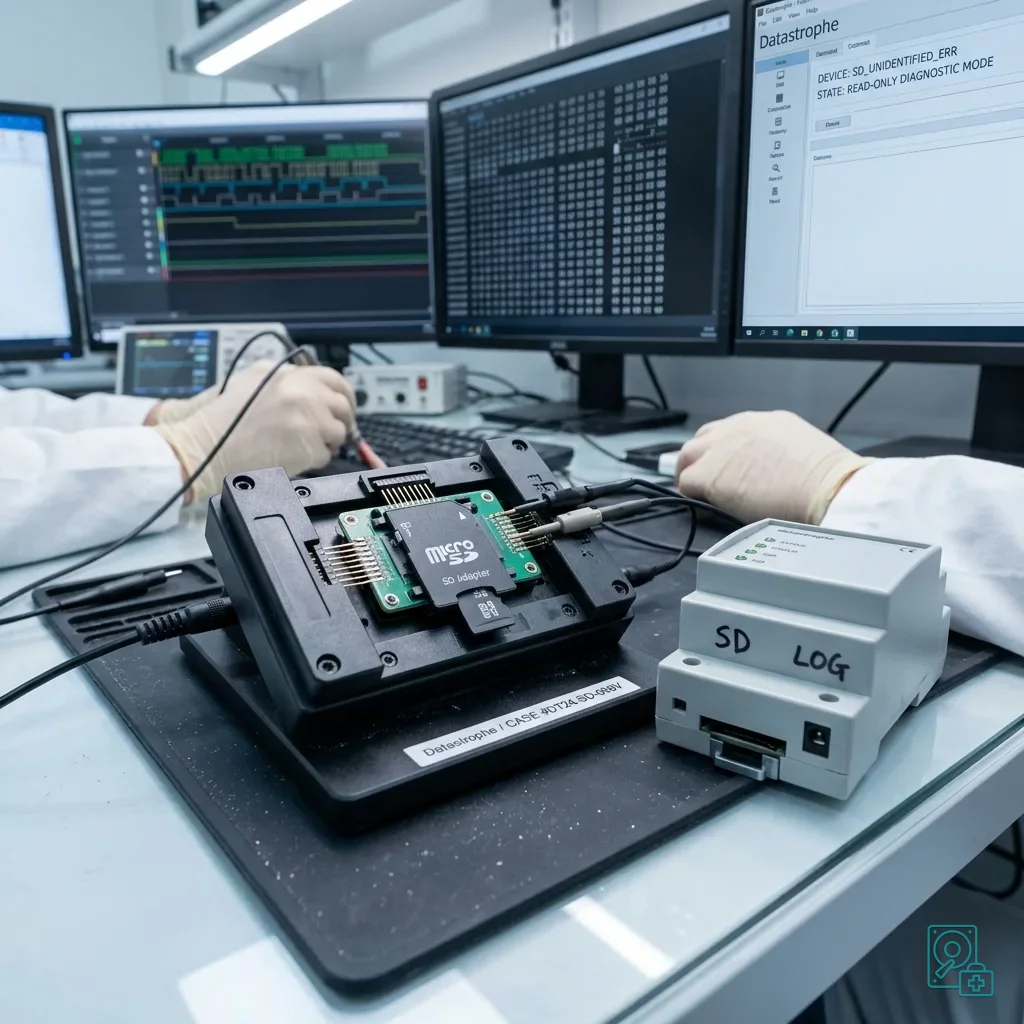
Diagnostic assessment
Technical Equipment May Write Continuously
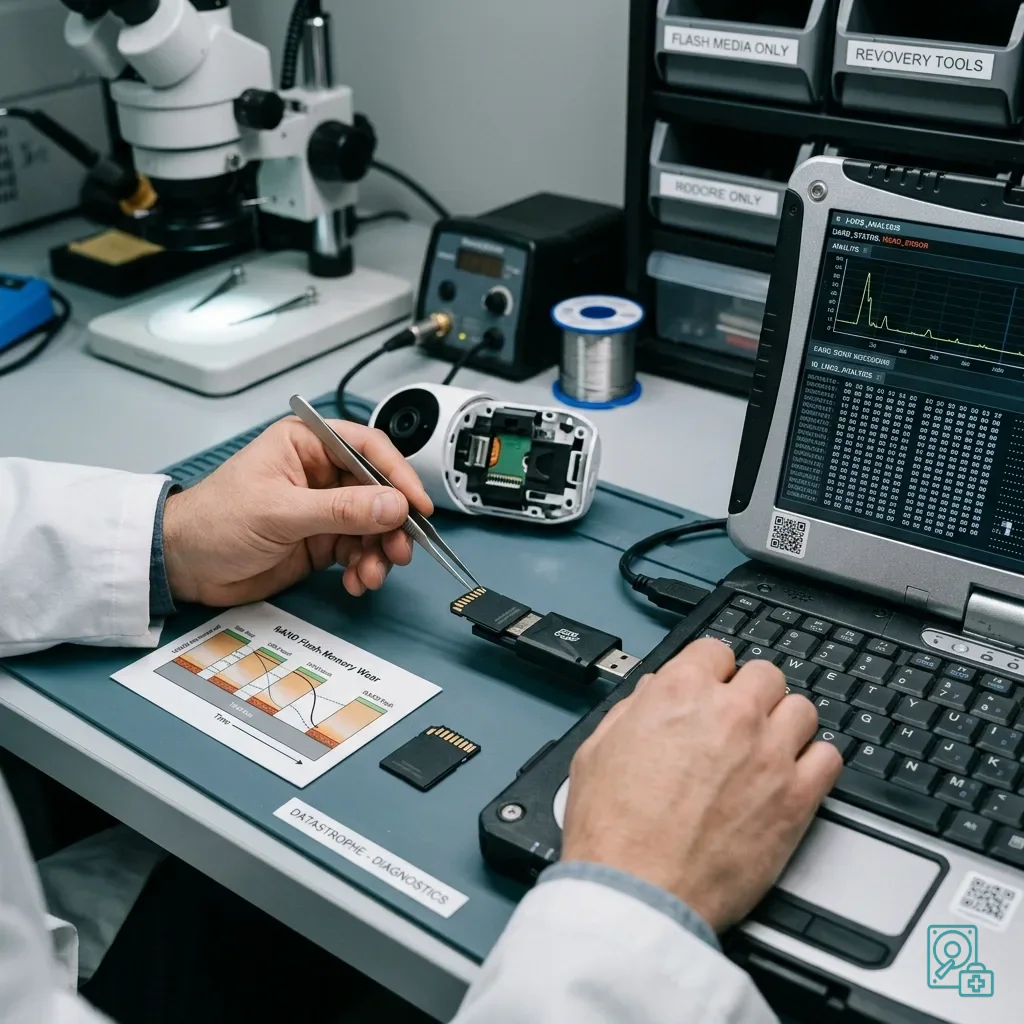
A memory card in technical equipment may be active all the time. A sensor, gateway, PLC, recorder or local workstation can write logs, images, events, local databases and configuration files. Continuous activity increases both wear and the risk of corruption.
Failure can appear in several ways: missing history, an unplayable sequence, a local unit that keeps restarting, lost settings, a format prompt or empty folders. The card may be physically healthy but logically inconsistent after a power cut.
Memory card data recovery covers the storage medium. The additional concern is the source system, which may continue writing even when the user believes they are only viewing an existing history.
Do not put the card back into the equipment without a clear objective. A restart may create new logs, purge older files or reset a database. Preserve the initial state before attempting to restore the system.
Identify the equipment type. A sensor, PLC, local gateway and recorder store different information in different structures. This prevents a search from focusing only on video when the real value lies in a database or configuration.
Distinguish local data from synchronised data as well. A local application may show only part of the history while the card holds more detail, or the reverse may be true. Verify that difference before deciding that data have been lost.
Diagnostic assessment
Logs, Configuration And Media Have Different Value
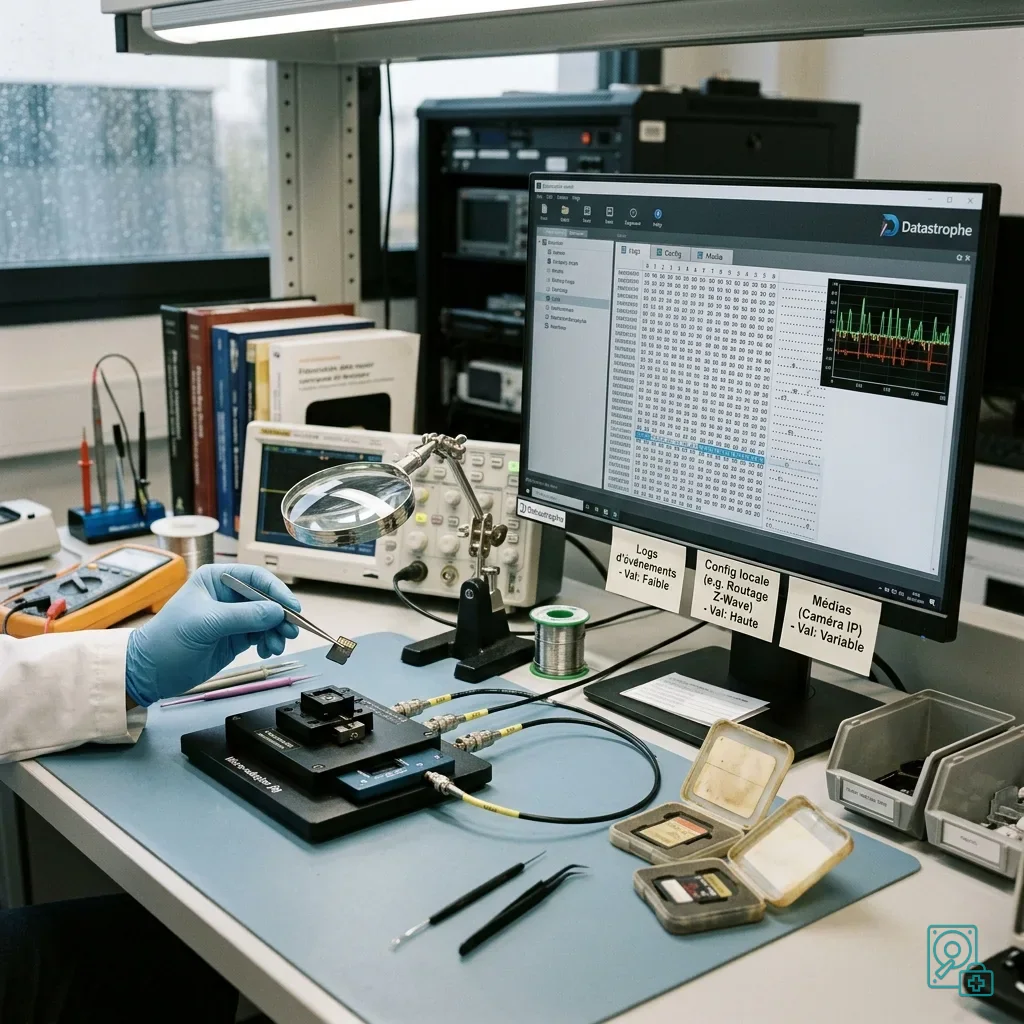
The most useful data are not always the most visible. Video or photographs may matter, but a local configuration, event log or export can be just as important. Define what is actually missing before assessment.
Technical systems sometimes use proprietary formats or local databases. A file recovered without its folder structure may be difficult to interpret. The equipment model, software version and role of the memory card help make the result meaningful.
Dates and times are often critical. An alert, video sequence, sensor history or pre-failure configuration may relate to a narrow window. When the card is unstable, that priority should determine the reading order.
Incident documentation is valuable here. Record the failure date, actions taken, displayed messages, restarts and attempted copies, because they can explain why particular data disappeared.
Keep accounts and access rights as well. Some systems encrypt data or bind them to a local profile. Without that context, recovered files may be present but difficult to use in their original environment.
Diagnostic assessment
Power Faults And Abrupt Shutdowns Cause Corruption
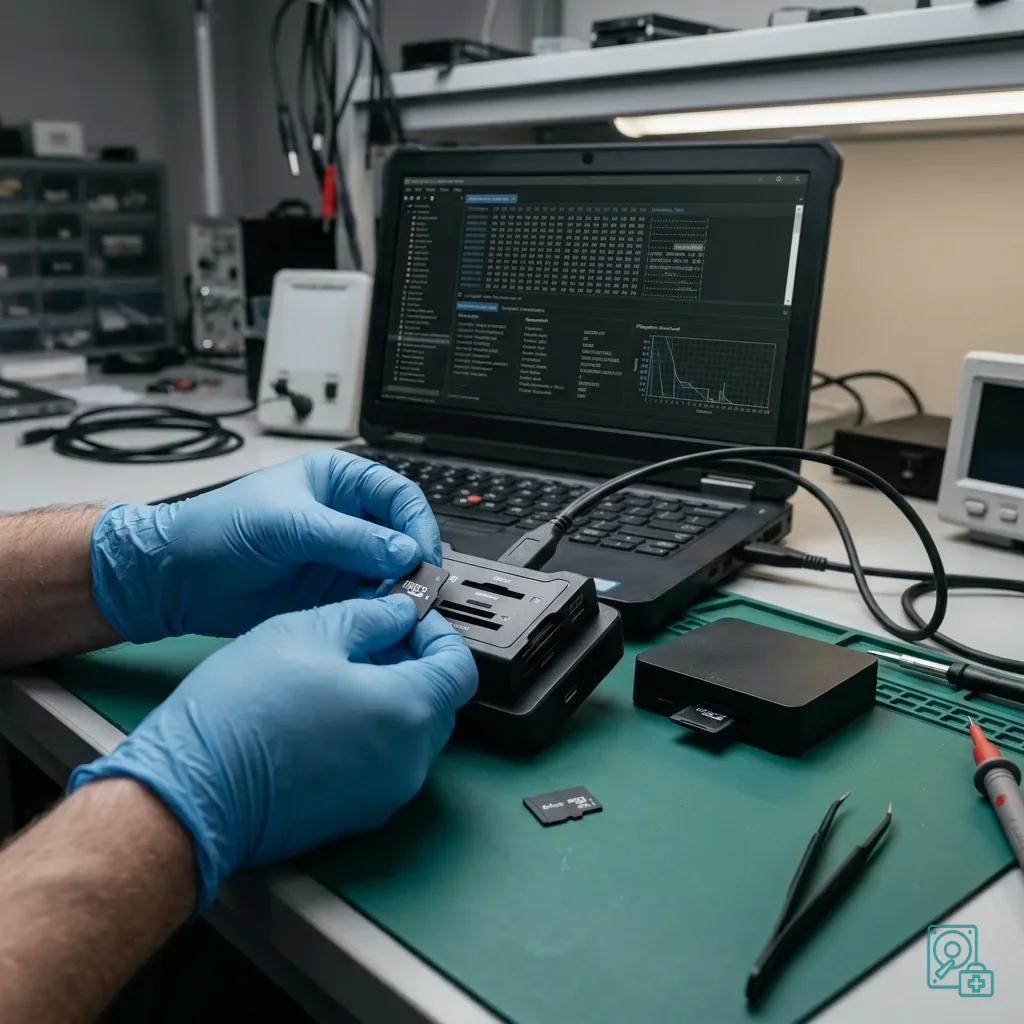
Memory cards in technical equipment often experience interruptions: unstable supply, restart, mains outage, card removal or an incomplete update. Any of these can leave a database or video file unfinished.
Avoid automatic repairs offered by a computer. They may change the logical structure and discard items considered inconsistent. Do not format a card showing a format prompt when its data are important.
Card quality matters too. Media intended for occasional use may not tolerate continuous writing. Video systems, frequent logging and local databases require greater endurance than a simple file transfer.
Stop if the card becomes hot, slow or disappears during reading. Continuing to stress unstable media can reduce the chance of obtaining the priority files.
A full or nearly full card is more exposed to corruption. Systems that record in a loop automatically remove older data, so continued operation after an incident may overwrite the exact period required.
Diagnostic assessment
Separate Service Restoration From Data Recovery
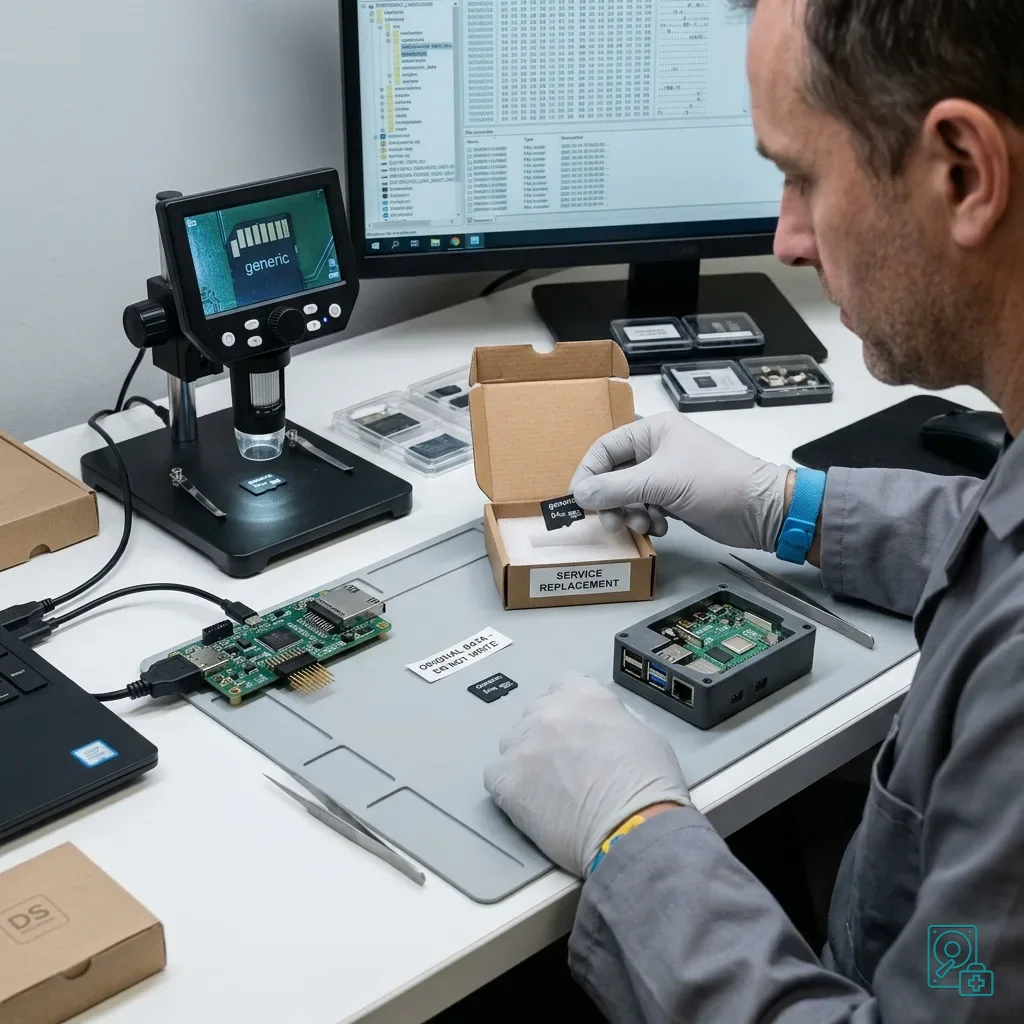
When technical equipment must remain available, resetting it with a new card or reformatting the old one is tempting. Restoring service must nevertheless remain separate from recovering data, and the original card should stay preserved.
The installation can sometimes resume on new media while the failed card is isolated for assessment. This prevents writes to the source and provides a fresh folder structure that can be compared with the expected layout.
Verify every backup. A cloud synchronisation, local copy or automatic export may be incomplete. Do not assume a history exists elsewhere until it has been opened and checked.
Datastrophe assesses the card, symptoms and priorities. The objective may be a particular period, configuration, set of logs or media files rather than an unfiltered image of everything.
When the equipment creates a new structure on a replacement card, that layout can become a reference. It reveals expected folders, filenames and databases without modifying the original card under recovery.
The handover should state its limits. A log may be complete but difficult to import, a video may play outside the application, and a configuration may require validation by the manufacturer or responsible integrator.
That final check prevents a successful extraction from being confused with a genuinely restored service.
Diagnostic assessment
Prevent Loss On Technical-Equipment Cards
Equipment that writes frequently should use suitable cards that are replaced on a schedule. Memory cards are not permanent archives and wear more quickly under continuous logs or looping files.
Export important configurations and data regularly. A backup should be tested by reading it, not merely reported as active, and critical histories should exist somewhere other than the installed card.
Limit power interruptions as well. Stable power, clean shutdown and a documented card-replacement procedure reduce corruption. For sensitive systems, recording the model and export format also speeds up any later assessment.
A failed technical-equipment memory card therefore needs a methodical response: preserve it, document the context, avoid writes and define the useful data before extraction begins.
Diagnostic assessment
Primary Technical References And Limits
Reference scope — equipment memory card data recovery: For technical equipment memory card data recovery, the primary references used are www.sdcard.org. Physical evidence — equipment memory card data recovery: They define the relevant preservation, storage or validation concepts, but they cannot establish the exact physical condition, controller state, key availability or business consistency of the device received. Controller evidence — equipment memory card data recovery: Those points require measurements on the original set and verification on copies.
Diagnostic assessment
Arrange A Controlled Assessment
Complete set — equipment memory card data recovery: For a technical examination of technical equipment memory card data recovery, provide the complete device or storage set, its associated power and interface parts, the symptom timeline and the priority records. Incident history — equipment memory card data recovery: Keep member order, labels and authorised credentials separate from the parcel paperwork; do not restart the source merely to obtain a new screenshot.
Laboratory responsibility — equipment memory card data recovery: Datastrophe performs the diagnosis, integrity checks and recovery directly in its own laboratory with its own team. Free assessment — equipment memory card data recovery: Diagnosis and the quotation are free. Transport boundary — equipment memory card data recovery: Private collection and return is included; the carrier moves only the sealed parcel and neither accesses nor processes its data.
Controlled list — equipment memory card data recovery: Before any payment, the client receives the proposed price and a checked list. Verification classes — equipment memory card data recovery: Each item is classified, in order, as recoverable_verified, partial, detected_unverified or unrecoverable. Payment trigger — equipment memory card data recovery: Only recoverable_verified items whose contents were checked and found usable are presented as recoverable. No-result rule — equipment memory card data recovery: Payment is due only after the client accepts both the list and the price.
No-result rule — equipment memory card data recovery: If no usable data is verified, recovery fails, or the client declines the list or price, no standard fee is payable. Rare-part exception — equipment memory card data recovery: The only exception is a rare, costly and non-refundable part, which may be ordered only after a separate, explicit and priced proposal has been accepted.